Scientists Validate Technology That Cuts Prostate Cancer Diagnosis Time in Half
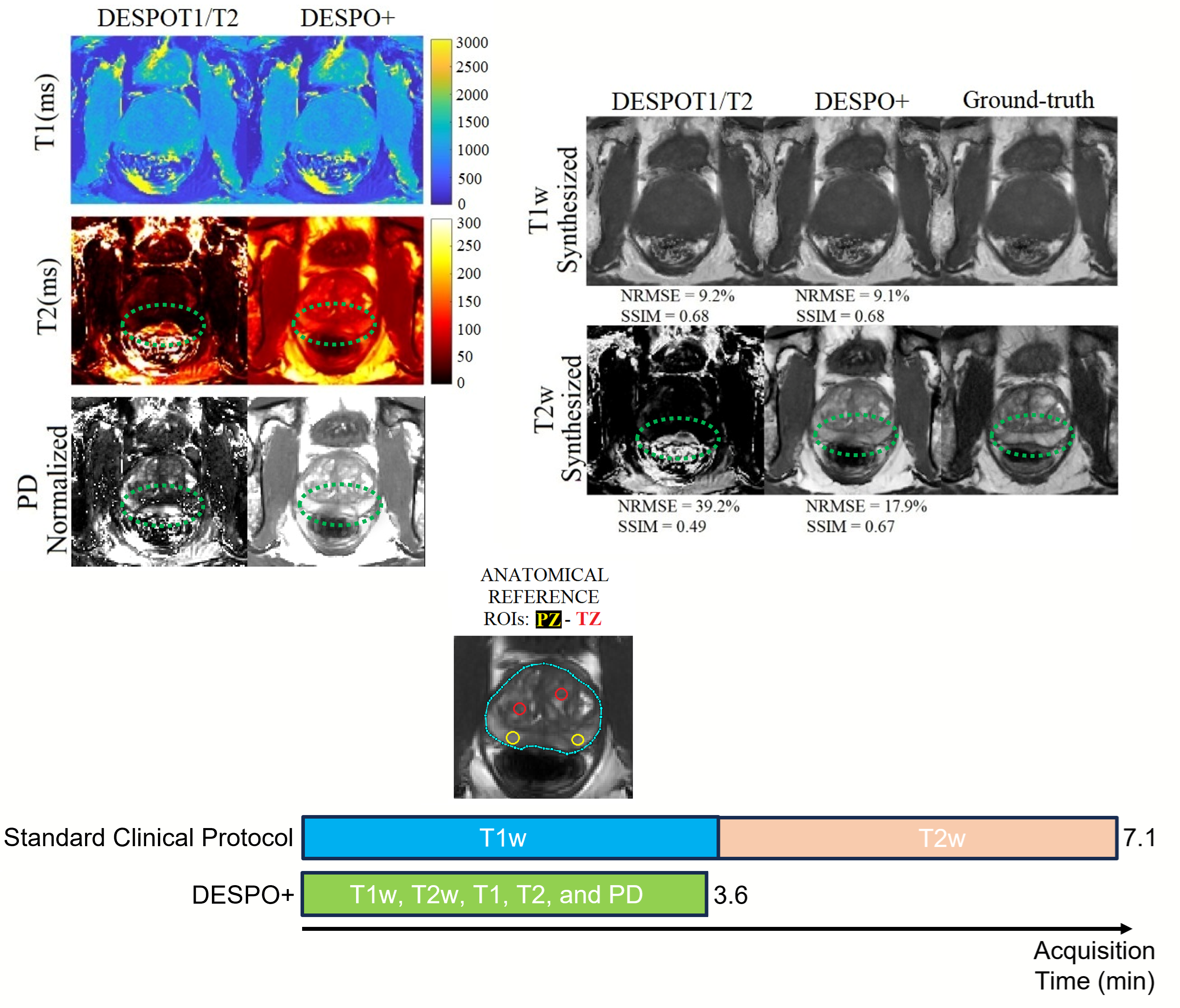
On the occasion of World Prostate Cancer Day, researchers present "DESPO+," a 3D MRI protocol that takes only 3.6 minutes and eliminates visual distortions in the organ's most critical zone — an advance that opens the door to reducing waiting lists and expanding access to more precise preventive exams.
Every year, more than 1.5 million men worldwide are diagnosed with prostate cancer, according to figures from the World Health Organization (WHO). In Chile, it is the most common cancer in the male population: over 11,000 new cases per year, according to projections from the Global Cancer Observatory (Globocan).
Although multiparametric MRI (mpMRI) has established itself as the key tool for early detection and avoiding unnecessary biopsies, the lengthy time patients must spend inside the scanner — combined with variability in image interpretation — limits its widespread adoption in the healthcare system.
In response to this challenge, and coinciding with the commemoration of World Prostate Cancer Day on June 11, an interdisciplinary team of scientists from Instituto Milenio iHEALTH, Universidad Católica, and Universidad de Las Américas has clinically validated a groundbreaking protocol called DESPO+.
This technology is capable of scanning and generating three-dimensional quantitative maps of the prostate in just 3.6 minutes, reducing conventional clinical protocol times by 50%. The key value of this development lies in its ability to solve a longstanding technical problem: the visual distortions or "artifacts" caused by the body's magnetic susceptibility, particularly in the peripheral zone of the prostate. This detail is critical, as it is precisely in this region where approximately 70% of prostate cancer cases originate.
Dr. Ronal Coronado, postdoctoral researcher and lead author of the study, explains the clinical impact of this milestone: "Traditional three-dimensional mapping methods are often impractical in daily medical routines due to their long acquisition times. DESPO+ combines mathematically accelerated rapid acquisition sequences with a dictionary-matching system. This not only cuts exam time in half, but also demonstrated complete immunity to image distortions in the peripheral zone, allowing for statistically significant differentiation between healthy tissue and tumor lesions. It is putting physics and data science directly at the service of the patient."
The prospective clinical study, which evaluated patients with suspected disease using a high-field 3.0 Tesla scanner, was validated through blind interpretation by expert radiologists following the international PI-RADS v2.1 guidelines. The results confirmed that the quantitative maps obtained through this rapid technique accurately identify the aggressiveness and presence of lesions with mathematical precision.
As Coronado notes, "the implementation of technologies like DESPO+ has the potential to optimize workflow in clinics and hospitals. This translates into the possibility of doubling patient throughput per hour — a fundamental step toward democratizing access to the exam and significantly reducing waiting lists in the public health system. Furthermore, by providing repeatable and standardized quantitative measurements, diagnosis no longer depends exclusively on the specialist."
The project is led by the Research Nucleus in Data Science (NIDS) at Universidad de Las Américas and Instituto Milenio iHEALTH. It also involves the Biomedical Imaging Center and the Department of Radiology at Pontificia Universidad Católica de Chile, and is funded through public grants from the National Research and Development Agency (ANID-Fondecyt). At the international level, the Technical University of Munich (Germany) and King's College London (United Kingdom) collaborate in the methodological design.
Looking ahead, the research team is already planning to expand the clinical cohort to further strengthen the epidemiological impact of these findings and accelerate their subsequent transfer to healthcare centers across the country.
