New Recommendations for the Management of Lentigo Maligna Melanoma
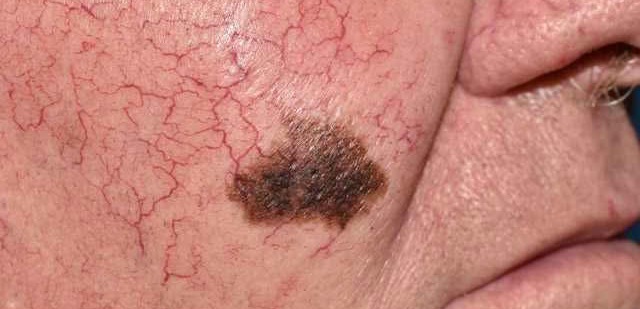
Cristián Navarrete, principal investigator at the iHEALTH Millennium Institute, joined a consortium of 53 experts from 20 countries that formulated evidence-based recommendations for the diagnosis, treatment, and follow-up of this melanoma subtype.
Lentigo maligna (LM) is a subtype of cutaneous melanoma that primarily affects older adults, presenting as a slow-growing lesion with irregular borders and variable pigmentation, typically in sun-damaged areas of the face and neck.
As noted by Cristián Navarrete, researcher and dermatologist at the Pontificia Universidad Católica de Chile: "What sets lentigo maligna melanoma apart from other melanomas is where it arises and how it grows. It tends to appear in areas of high sun exposure, mainly on the face, and spreads laterally. This means that when surgical removal is attempted, the margins are very often compromised, and the lesion frequently recurs."
Another factor that complicates its management is the age profile of patients. LM tends to be diagnosed in individuals over 65, who frequently present with comorbidities that make surgery or anesthesia more challenging. For this reason, as Navarrete argues, the management of this melanoma cannot be equated with that of trunk or limb melanomas — and that distinction is precisely what motivated the development of this guideline.
In this context, clinical trials and studies specific to LM are scarce, and most recommendations have been derived from limited case series or extrapolated from other melanoma types.
To bridge this gap, the International Dermoscopy Society convened a multidisciplinary consortium of 53 specialists — including dermatologists, surgeons, radiation oncologists, pathologists, and epidemiologists — who worked together to produce evidence-based recommendations, a document in whose drafting Navarrete participated.
Epidemiological context
Data from the SEER registry (2000–2019) show a sustained increase in LM incidence, which in some regions has already surpassed superficial spreading melanoma as the most common in situ melanoma.
Chile, for its part, faces a significant gap in melanoma epidemiological surveillance. The country lacks a National Cancer Registry, and LM is not a notifiable disease. The most recent available study, from 2025, confirms a rising incidence, but precise data remain limited.
At the Universidad Católica Medical Center, nearly one thousand melanoma cases were recorded over the past five years, of which 3.6% corresponded to lentigo maligna. At the national level, skin cancer deaths increased by approximately 60% over the last decade, with more than 4,600 fatalities according to DEIS/Minsal. It is estimated that 1 in 10 Chileans will develop skin cancer over their lifetime, despite the fact that in most cases it is preventable.
Forsea A-M, Pampena R, Akay BN, Apalla Z, Argenziano G, Briatico G, et al. International Dermoscopy Society consensus recommendations for the management of lentigo maligna. J Eur Acad Dermatol Venereol. 2026;00:1–18. https://doi.org/10.1111/jdv.70406
