Researcher Cristina Alfaro wins the 2026 For Women in Science Award
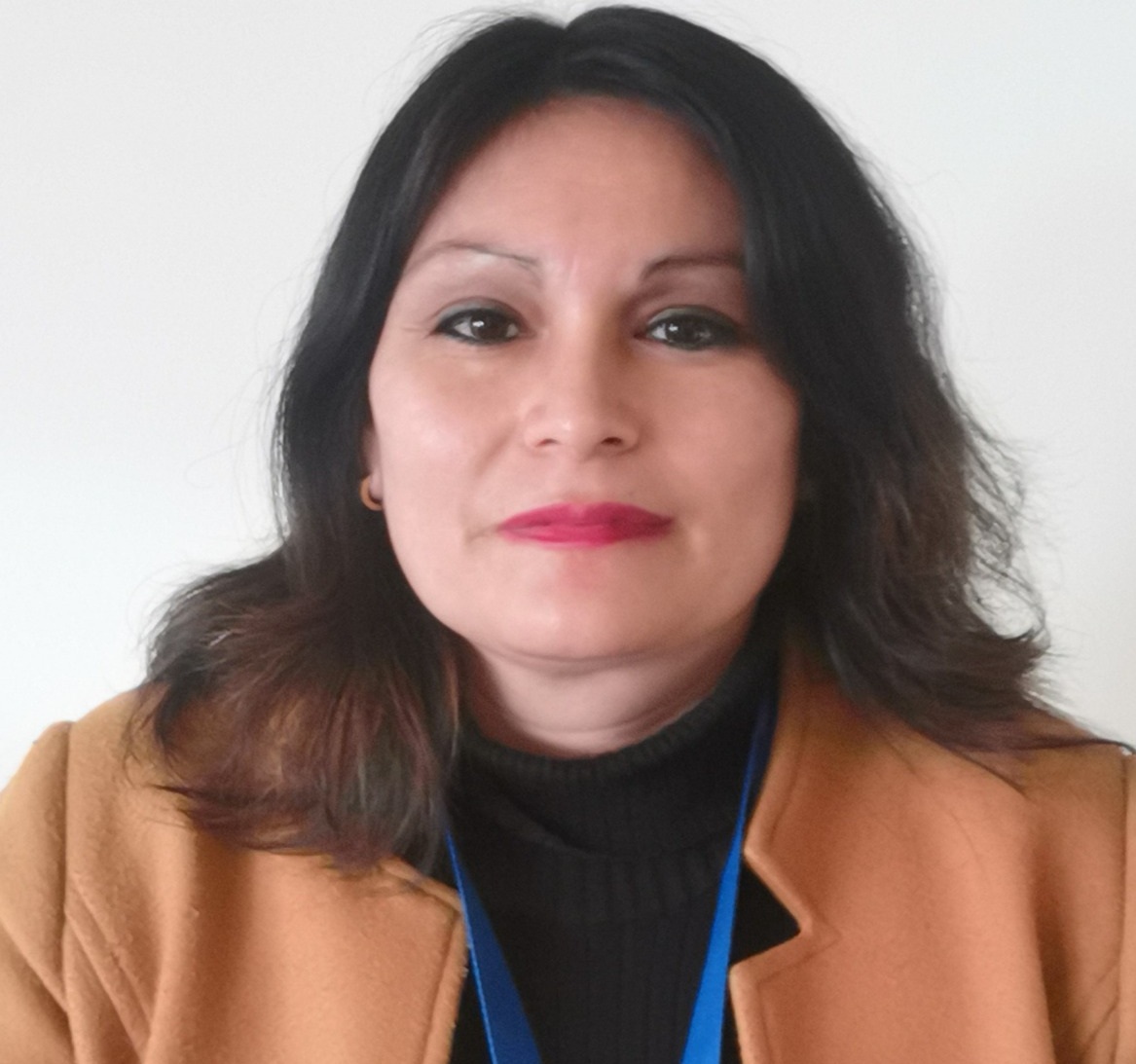
Her doctoral thesis develops artificial intelligence models to accurately segment breast tumors in digital breast tomosynthesis, a line of research that seeks to provide diagnostic support tools for breast cancer.
Cristina Alfaro Vergara, a medical technologist, faculty member at Universidad de Tarapacá, a student in the Doctoral Program in Biological and Medical Engineering at Pontificia Universidad Católica de Chile, and a researcher at the Millennium Institute iHEALTH, was honored with the For Women in Science 2026 Award, granted by L'Oréal Chile and UNESCO in collaboration with Chile's National Agency for Research and Development (ANID).
The award's main goal is to recognize female talent in Chile's scientific community, amplifying the visibility of each winner, showcasing her career and research, and providing funding to help her continue advancing her career.
The researcher noted that it is a "tremendous honor to be part of such an outstanding group of young scientists who applied, and to have been recognized. I take it with humility, because as scientists we always carry that share of doubt about our research," Cristina said of the selection.
Artificial intelligence against breast cancer
Her doctoral thesis, titled "Breast Tumor Volume Segmentation from Digital Breast Tomosynthesis (DBT) using a Deep Learning Approach," addresses one of the main challenges in breast cancer diagnosis: accurately characterizing tumors from images. Using convolutional neural networks, Alfaro aims to accurately segment breast tumor volume in digital breast tomosynthesis (DBT), a pseudo-3D imaging technique that reduces tissue overlap and improves lesion visualization, especially in dense breasts, thereby overcoming one of the limitations of conventional 2D mammography.
"In simple terms, I use all the benefits of the artificial intelligence algorithm to perform early breast cancer detection in mammography images. I have focused on using convolutional neural networks to characterize a tumor and segment it — that is, to outline it precisely. Among other things, if translated into clinical practice, this will help improve the outcomes of breast-conserving surgeries: giving patients a better chance of preserving healthy tissue, with only the affected area removed," the researcher explains.
One of the main obstacles her research faced was the scarcity of annotated databases for training the models, compounded by access and privacy challenges associated with real patient data. To address this, Alfaro developed and published BreasTomo-Synth, a publicly available synthetic DBT database hosted on the Zenodo repository, generated using FDA-validated software. The work has already produced one article published in the Journal of Imaging Informatics in Medicine, a Data Descriptor submitted to Nature Scientific Data, and a third manuscript submitted to the journal Diagnostics.
iHEALTH's contribution
Alfaro is developing her thesis under the mentorship of iHEALTH director Claudia Prieto and fellow institute researcher Domingo Mery, whom she describes as "tremendous mentors, role models as scientists." She also highlights the Millennium Institute's role in her doctoral training and in fostering interdisciplinary collaborations.
"iHealth has been a tremendous support. It has really developed interdisciplinary work and networking: the seminar series are very important, and taking part in the various activities iHealth organizes has been key to finding collaborations. The colleagues I've worked and published with, I met precisely through those opportunities," Alfaro says.
In that spirit, Cristina has a message for those who dedicate their lives to research: "No matter your age — whether you've just graduated, you're young, or you're a bit older like me — if you have an idea and feel capable of tackling an interesting topic, go for it. The environment is more favorable today, with new legislation that makes studying more welcoming for those with families. Society benefits from the many outstanding women scientists waiting for their opportunity."
Cristina Alfaro is currently in the final stage of writing her thesis, with her defense expected in a few weeks. The For Women in Science awards ceremony will be held in Santiago, on a date yet to be announced.
