Lumbar infiltration simulator and AI-based pancreas segmentation win awards at IV CINVIE 2026
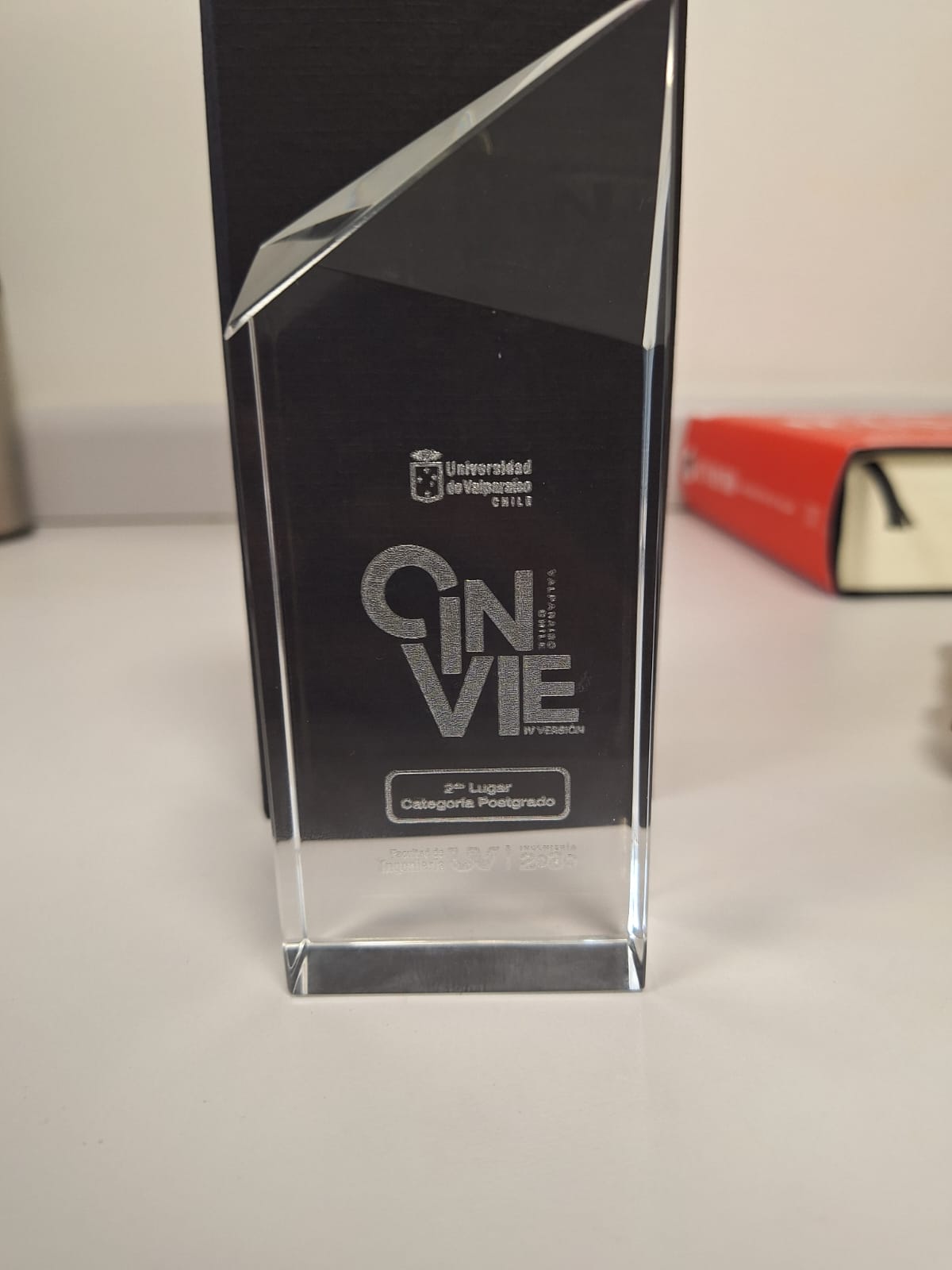
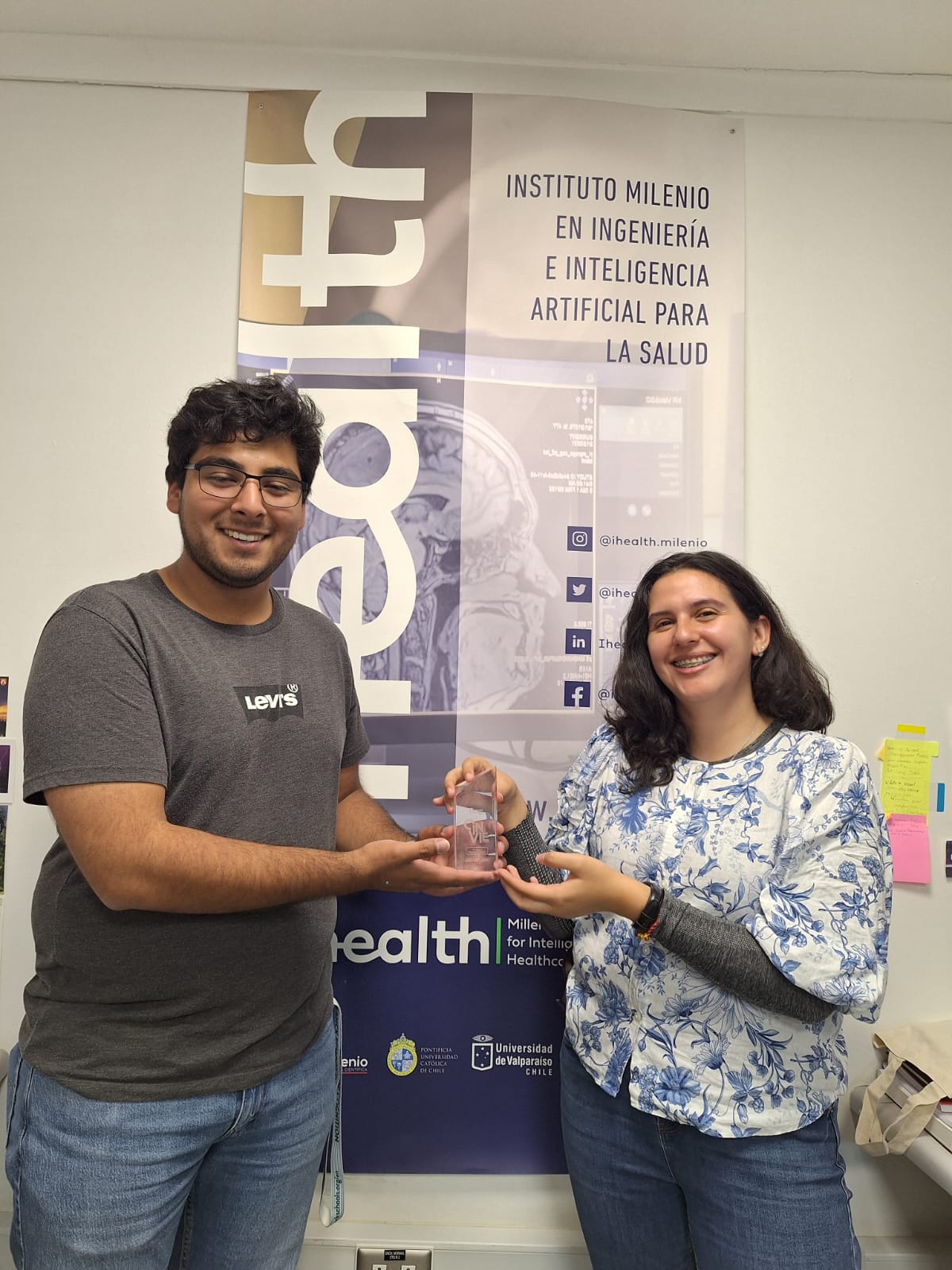
Valentinna Montoya (1st place, undergraduate) and Elizabeth Pellegrini (2nd place, graduate), both from the Universidad de Valparaíso (UV) and members of iHEALTH, were recognized in the Student Paper Competition of the congress organized by the UV School of Engineering.
Two projects that bring engineering and artificial intelligence to healthcare stood out in the Student Paper Competition of the Fourth International Congress on Interdisciplinary Research and Engineering (CINVIE 2026). The event was organized by the School of Engineering of the Universidad de Valparaíso as part of the Ingeniería 2030 Project.
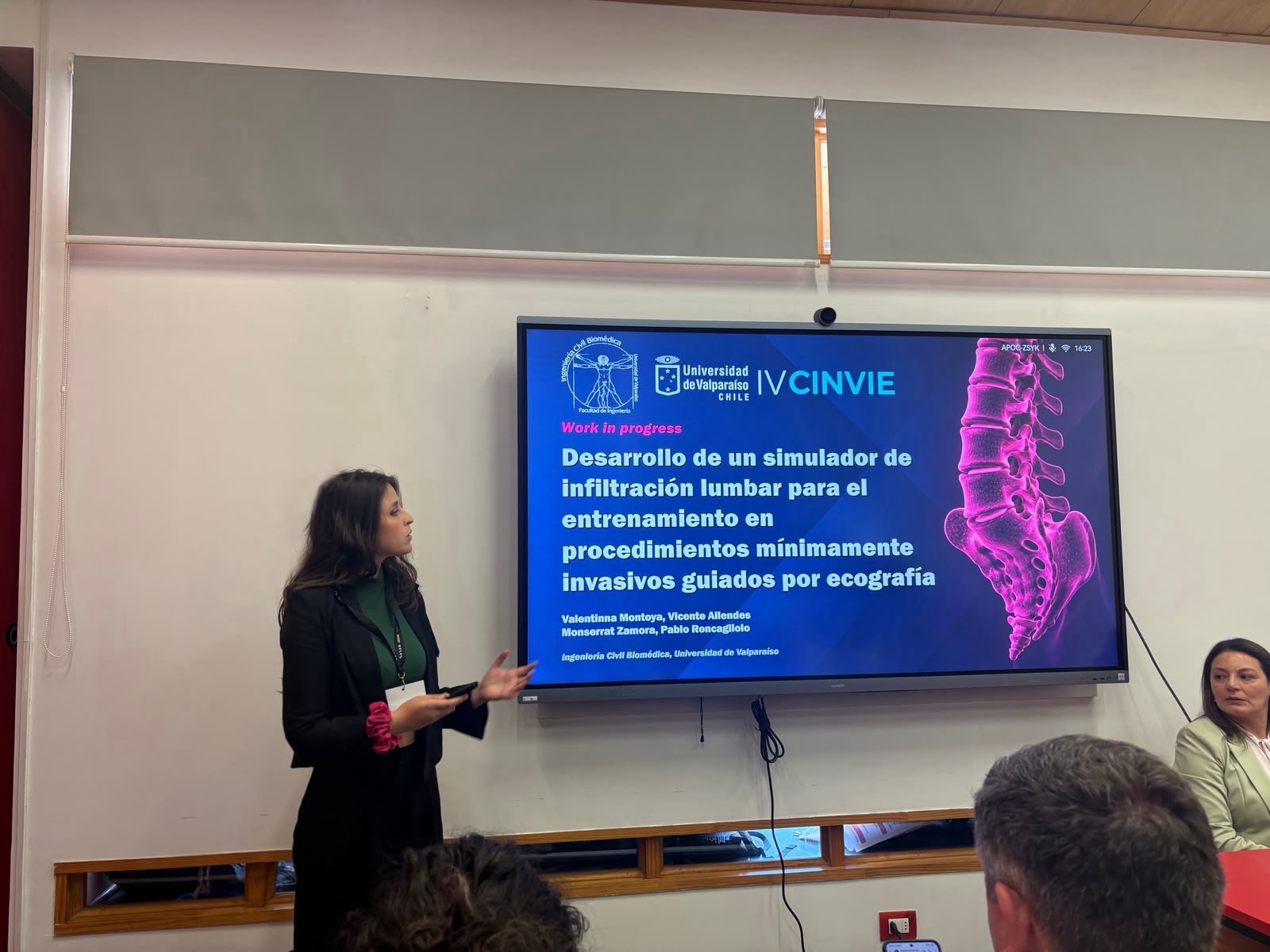
CINVIE brings together research results, technological developments and interdisciplinary experiences related to the challenges of engineering, innovation and sustainable development. In the undergraduate category, first place went to Valentinna Montoya for her work Development of a lumbar infiltration simulator for training in ultrasound-guided minimally invasive procedures. The simulator is a phantom, an anatomical practice model, designed to strengthen the training of future physicians by “bringing the operating room experience into the safety of the classroom,” she explains.
Ultrasound-guided lumbar infiltration involves inserting a needle to deliver medication into a specific structure in the lumbar region, guided by ultrasound imaging. “It’s difficult to learn,” Valentinna says, because it requires coordinating several tasks at once: recognizing the anatomy on screen, keeping a good image with the transducer, and controlling the direction and depth of the needle, all while interpreting a two-dimensional image to navigate a three-dimensional body.
In addition, “it is only practiced directly on patients, which is not a good environment for learning.” The closest existing phantoms are designed for lumbar puncture and only allow trainees to practice the tactile sensation. The new simulator, by contrast, incorporates electronics, provides real-time feedback on the anatomical target reached, and will soon add ultrasound integration.
The idea grew out of a concrete need: medical staff at Hospital Carlos Van Buren contacted the team’s faculty advisor, concerned about the lack of accessible training options for new generations. Among the main challenges were learning to use segmentation software to obtain a reliable anatomical model and instrumenting the needle so it could work wirelessly. The team was also awarded the Ingeniería 2030 prototyping fund.
“Winning first place was very rewarding, because it represents the effort behind every test, every adjustment and every difficulty we had to overcome,” she says. Next steps include developing a filling material that produces realistic ultrasound images of the lumbar region, conducting user testing to measure the impact on learning, and adding an augmented reality module. The goal is for the simulator to reach universities and hospitals, backed by evidence.
Teaching a computer to outline the pancreas
In the graduate category, Elizabeth Pellegrini won second place with Automatic pancreas segmentation with deep learning networks: a comparative study of Attention U-Net, UNETR and Swin UNETR. This technique allows a computer to accurately identify which parts of a medical image correspond to the organ. It reduces analysis time from minutes or hours to seconds and eliminates variability between different operators.
The pancreas is particularly difficult to segment: it occupies less than 0.5% of the abdominal volume, has blurry, low-contrast boundaries, and its shape and position vary widely from person to person. It is also surrounded by critical blood vessels.
Determining whether pancreatic cancer can be operated on depends on understanding the relationship between the tumor and nearby vessels. “In the Latin American context, this is especially relevant, since pancreatic cancer is mostly diagnosed at advanced stages,” Elizabeth explains.
The study compared three architectures that represent different forms of “attention” in deep learning: local (Attention U-Net), global (UNETR) and hierarchical window-based (Swin UNETR). Attention U-Net performed best, with half of the cases exceeding 85% agreement with an expert’s manual delineation. Swin UNETR came very close, while UNETR did not exceed that threshold in any case. According to Elizabeth, this result reflects a better fit to the available data rather than any intrinsic superiority, a key point in a context of scarce datasets.
One of the most striking findings was that the standard 50% decision threshold, used by default in most studies, fell outside UNETR’s stable operating range. She therefore recommends calibrating this threshold for each model and institution before any clinical use.
“This award reflects the collective work of an interdisciplinary team that brought together engineers, physicists, biochemists and physicians from different institutions,” she notes. The achievement is shared with iHEALTH, MEDING, the Universidad de Valparaíso, the Pontificia Universidad Católica de Chile and physicians from Hospital Gustavo Fricke: Sebastián Ibarra, Nicole Roldán, Leonel Muñoz, Juan-Pablo Laguna, Paola Caprile, Cecilia Besa, Steren Chabert and Rodrigo Salas.
The research will move toward pancreatic tumor segmentation and multimodal AI work with Chilean cohorts from the Valparaíso Region. For these tools to reach the country’s hospitals, Elizabeth identifies several challenges: locally annotated data, clinical validation, computing infrastructure and a regulatory framework for AI-based medical software. With interdisciplinary collaboration, she estimates a 5- to 10-year horizon for pilot programs in referral centers.
CINVIE 2026 Student Paper Competition Winners
Undergraduate
Valentinna Montoya (Universidad de Valparaíso): Development of a lumbar infiltration simulator for training in ultrasound-guided minimally invasive procedures
Stephano Almendra (Universidad de Valparaíso): Continuous sign language recognition from YouTube-ASL using temporal segmentation and T5 linguistic supervision
María Fernanda Castro (Universidad Autónoma de Chile): Interaction between viscoelasticity and lobed geometry in annular flow with a moving core: implications for wire coating processes
Graduate
Sebastián Jiménez-Zúñiga (Universidad de Valparaíso): Fronto-midline theta preservation when removing simulated masticatory contamination from movement-cleaned single-leg-stance EEG: a semi-simulation upper-bound estimate
Elizabeth Pellegrini (Universidad de Valparaíso): Automatic pancreas segmentation with deep learning networks: a comparative study of Attention U-Net, UNETR and Swin UNETR
Pablo Olivares (Universidad de Valparaíso): A holistic product maturity framework for software: multi-agent evaluation, conflict-aware fusion and ordinal aggregation