iHEALTH team wins first place in an international challenge at SIPAIM 2026
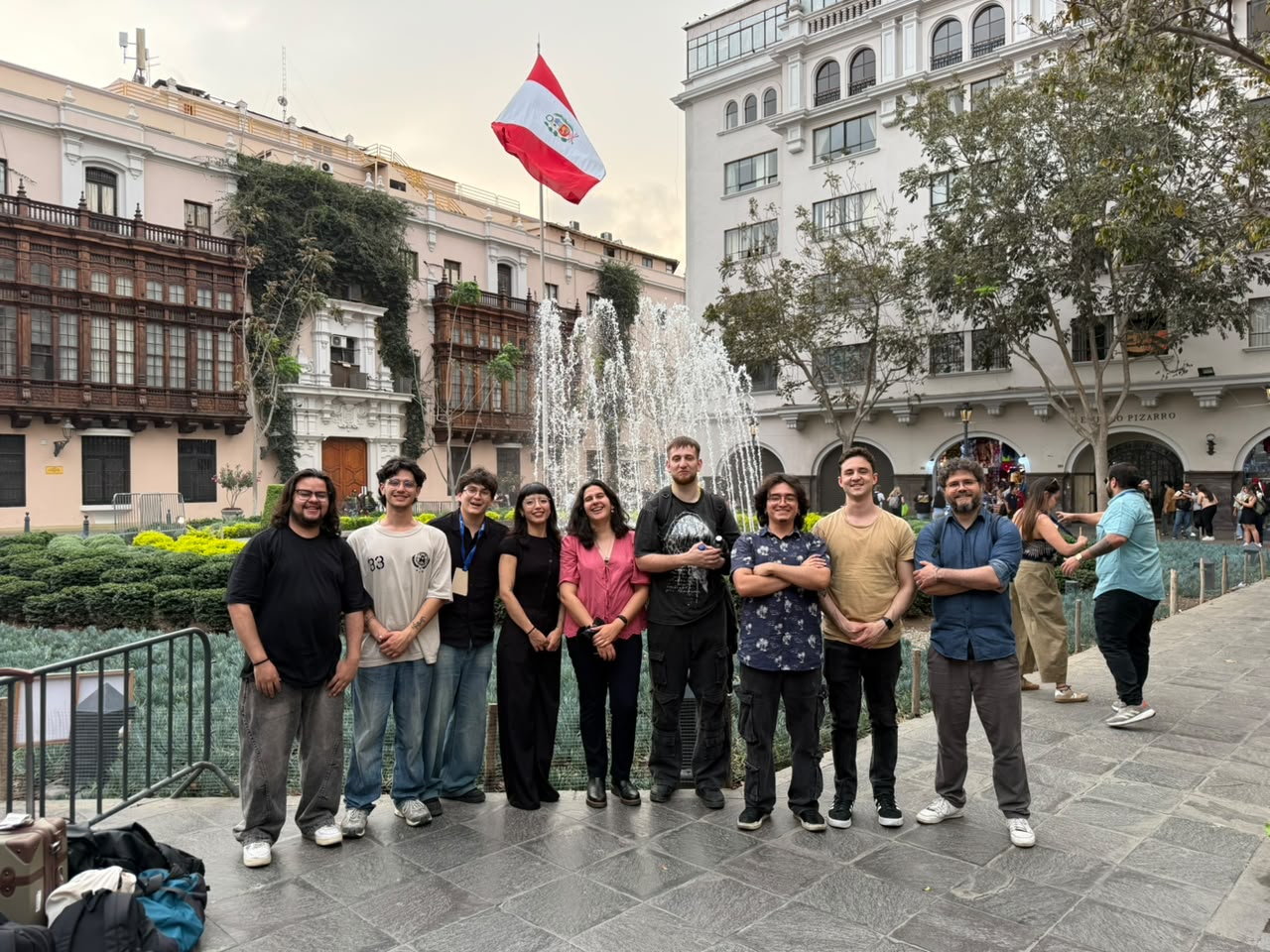
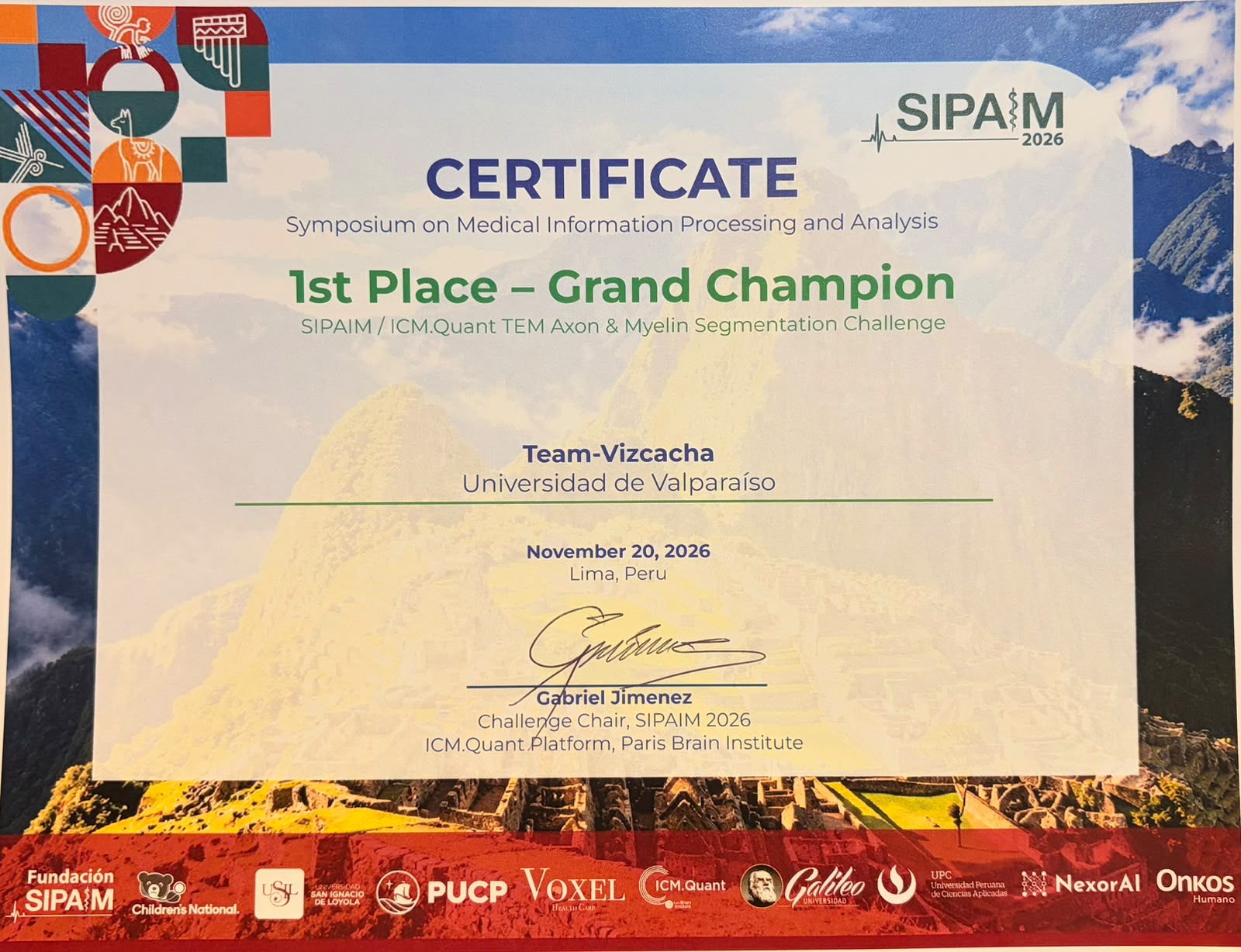
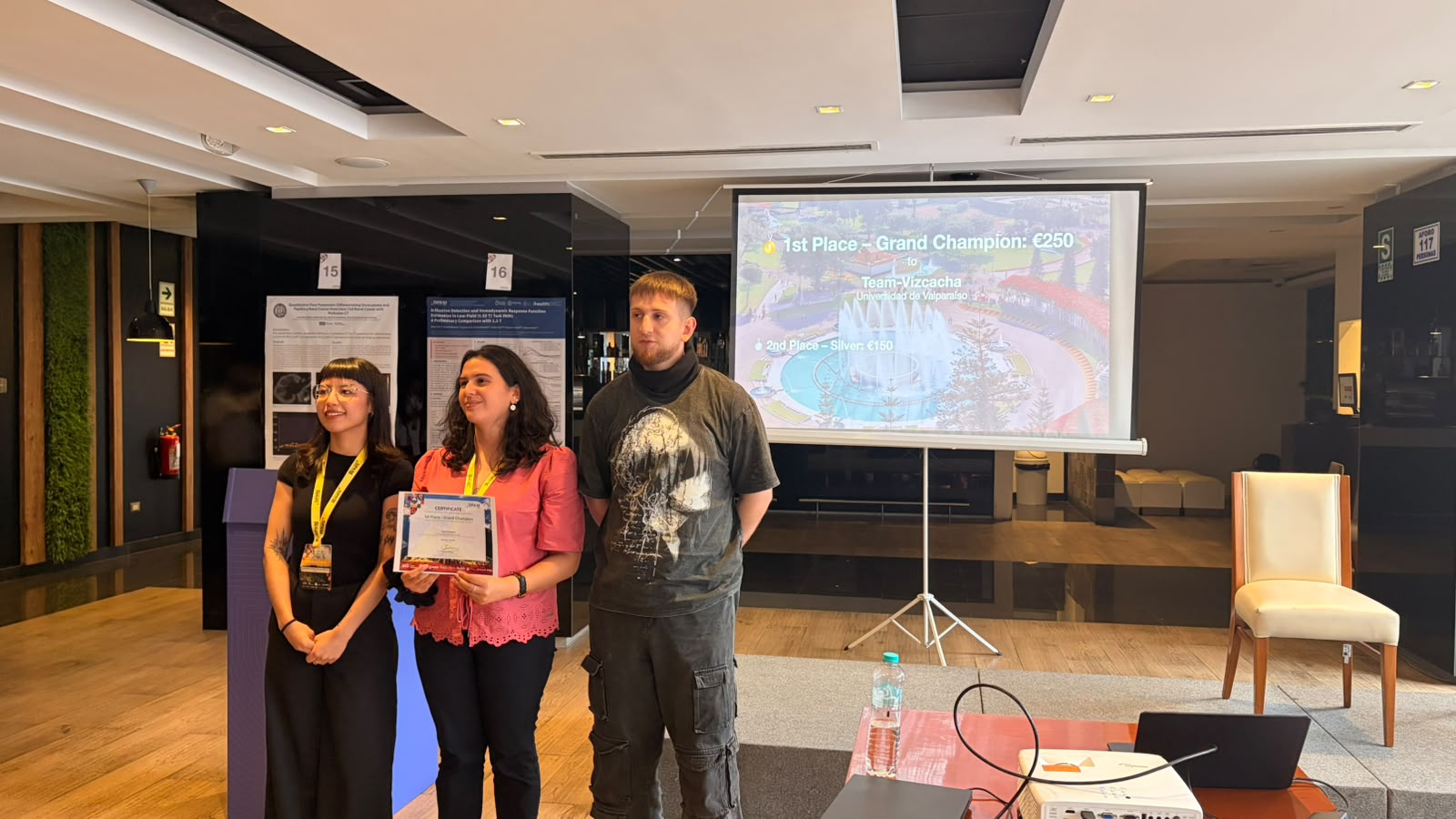
Team Vizcacha, from Universidad de Valparaíso, won first place (1st Place – Grand Champion) in the TEM Axon & Myelin Segmentation Challenge. At the same event, student Matías Ávila received the Best Poster Award.
iHEALTH students from Universidad de Valparaíso and Universidad Técnica Federico Santa María (UTFSM) came back from Lima, Peru, with two awards from the 22nd International Symposium on Medical Information Processing and Analysis (SIPAIM 2026), held November 16–20.
Team Vizcacha won first place, with the Grand Champion distinction, in the SIPAIM / ICM.Quant TEM Axon & Myelin Segmentation Challenge. SIPAIM organized the competition together with the ICM.Quant platform of the Paris Brain Institute. Teams had to automatically segment axons and myelin in transmission electron microscopy (TEM) images.
The winning work, "Learning which fibers an expert traces for automated g-ratio morphometry in TEM," proposes a method that learns which nerve fibers a specialist would trace. It uses this to automate the calculation of the g-ratio, which is the ratio between the axon diameter and the total fiber diameter, including the myelin sheath. This measure is used to assess how myelinated nerve fibers are.
The team members are:
Víctor Guerra Pinto
Esthefanía Astargo Valencia
Elizabeth Pellegrini Maldonado
Ronald Marca Roque
Gabriel Guerra Pinto
The challenge results were presented on November 16, and the award was given at the symposium's closing ceremony on November 20. "Winning this challenge and presenting our research at SIPAIM confirms that we can contribute artificial intelligence solutions to real problems in medical imaging from Chile. We weren't just trying to segment images well; we wanted to understand how a specialist makes decisions, and that approach is what made the difference," said members of the team.
Team Vizcacha members also presented their research in the symposium's oral sessions:
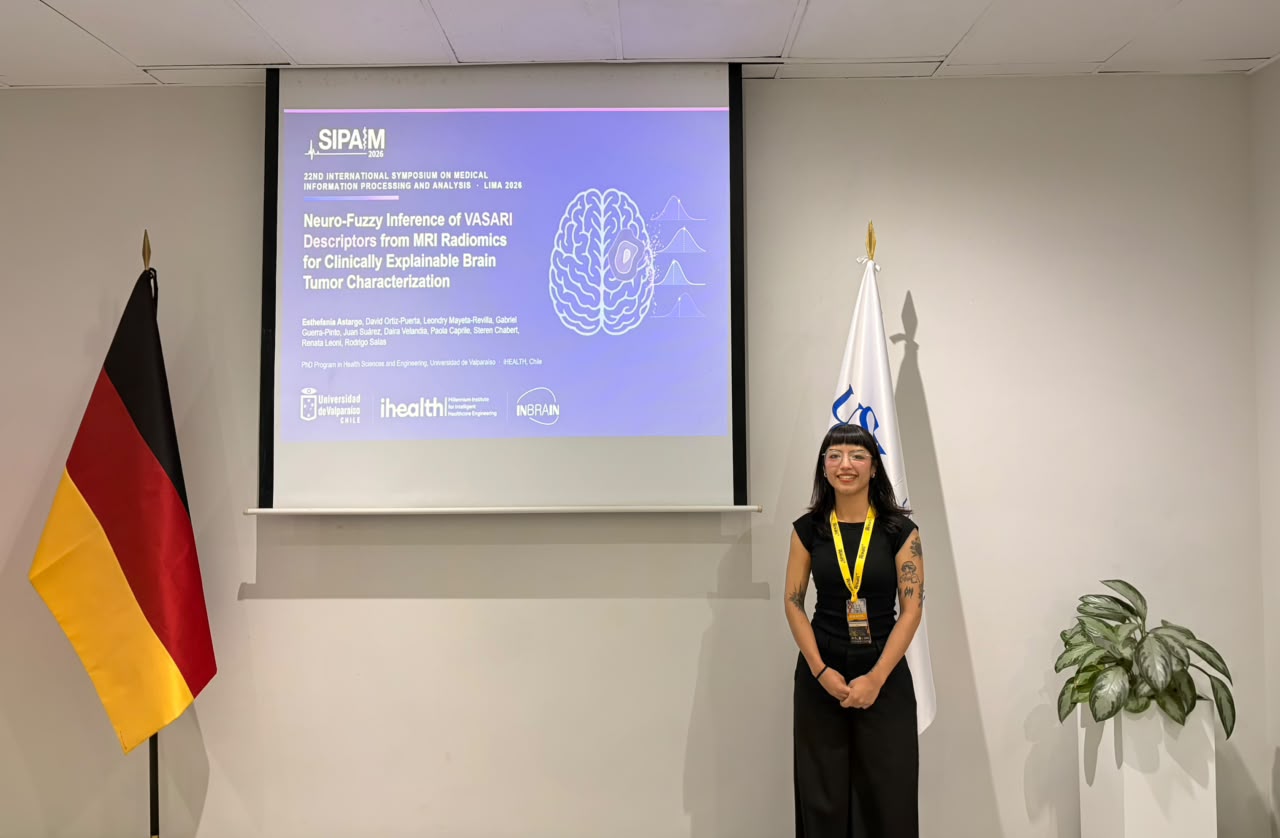
Esthefanía Astargo: "Neuro-Fuzzy Inference of VASARI Descriptors from MRI Radiomics for Clinically Explainable Brain Tumor Characterization," on explainable characterization of brain tumors from magnetic resonance images.
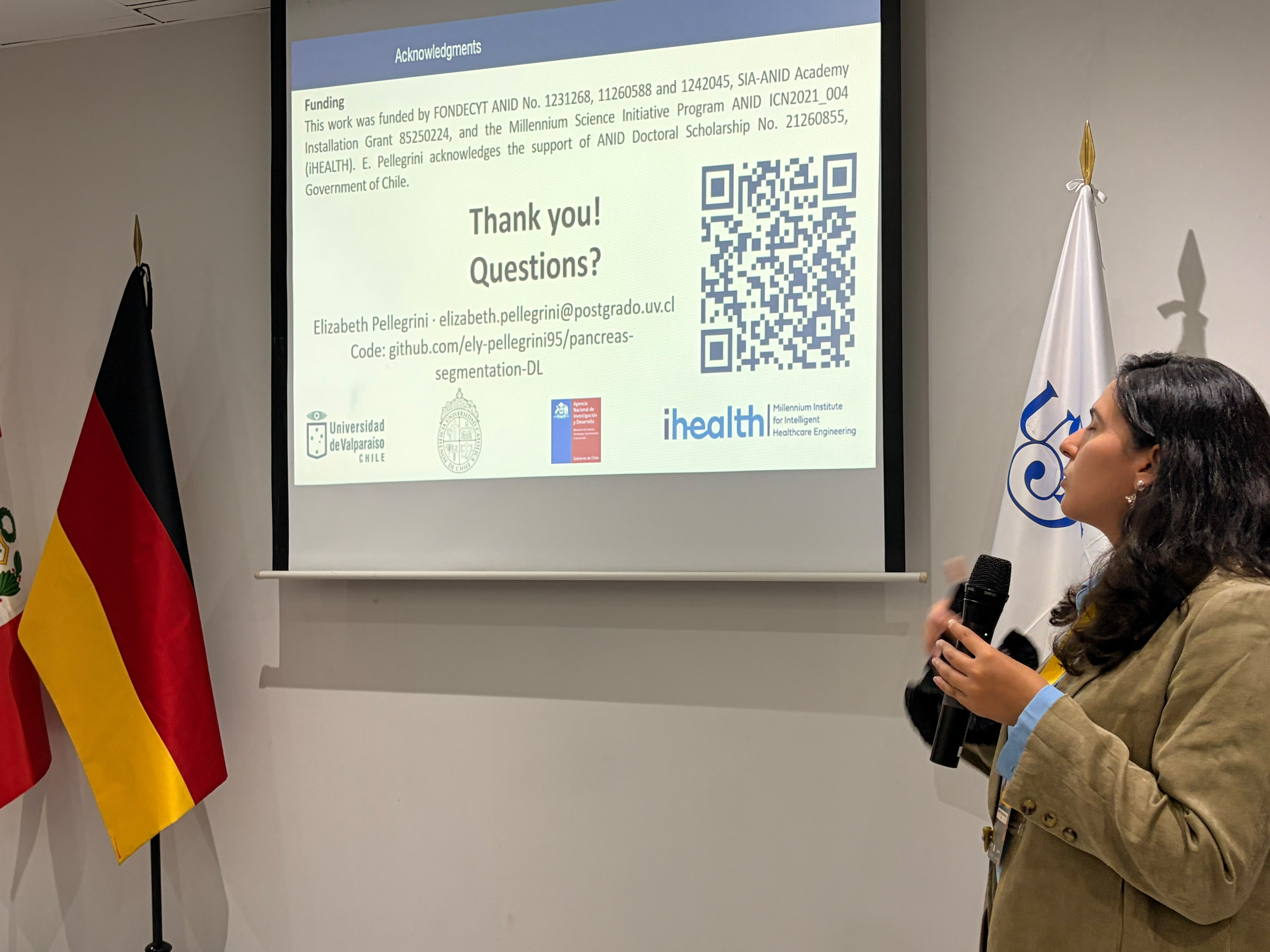
Elizabeth Pellegrini: "Effects of Pre-processing and Threshold Calibration on Local versus Global Attention Architectures for Pancreas Parenchyma Segmentation," which compares deep learning architectures for segmenting the pancreas in CT scans.
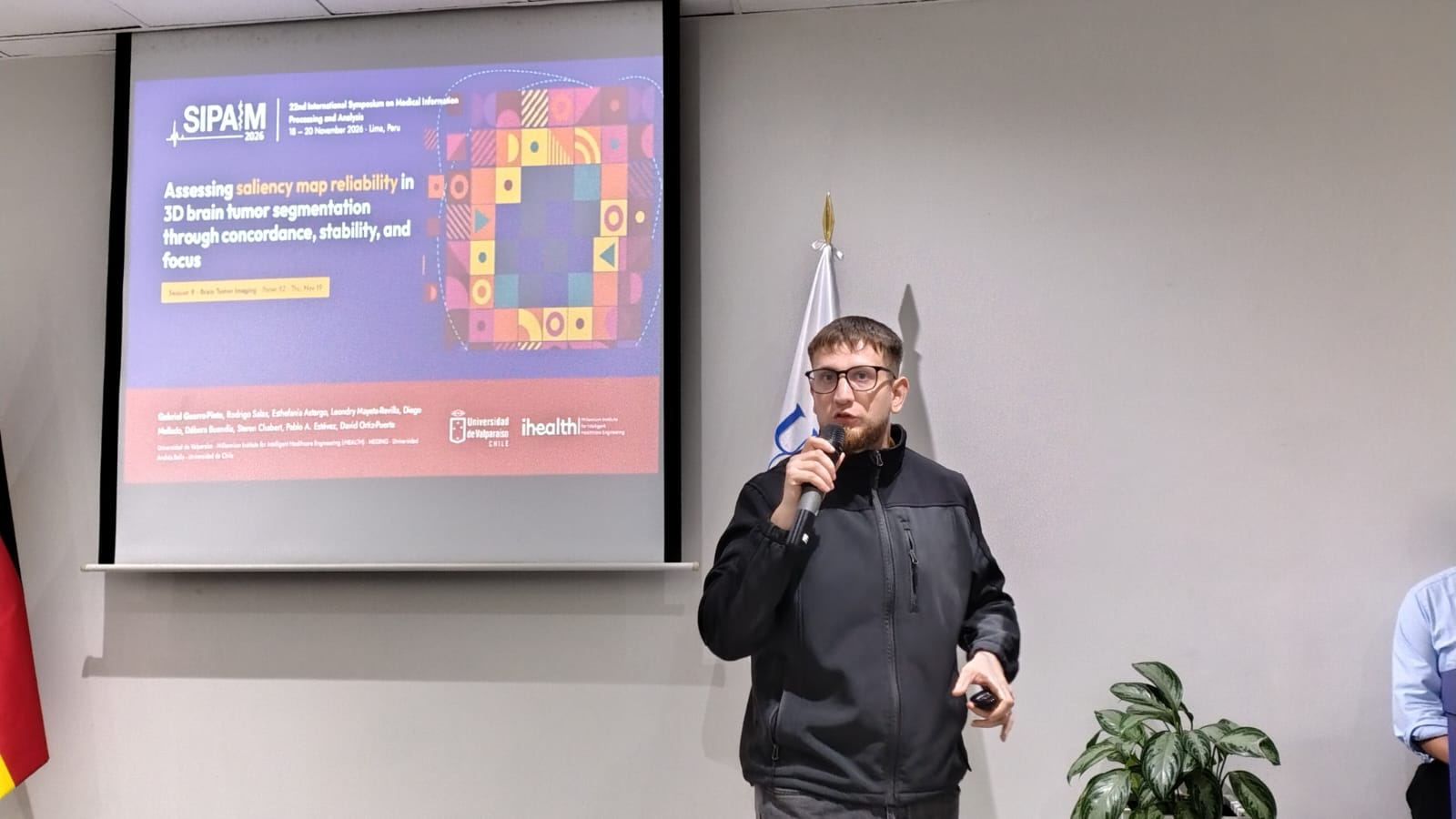
Gabriel Guerra: "Assessing Saliency Map Reliability in 3D Brain Tumor Segmentation through Concordance, Stability and Focus," on the reliability of the maps that explain the decisions of brain tumor segmentation models.
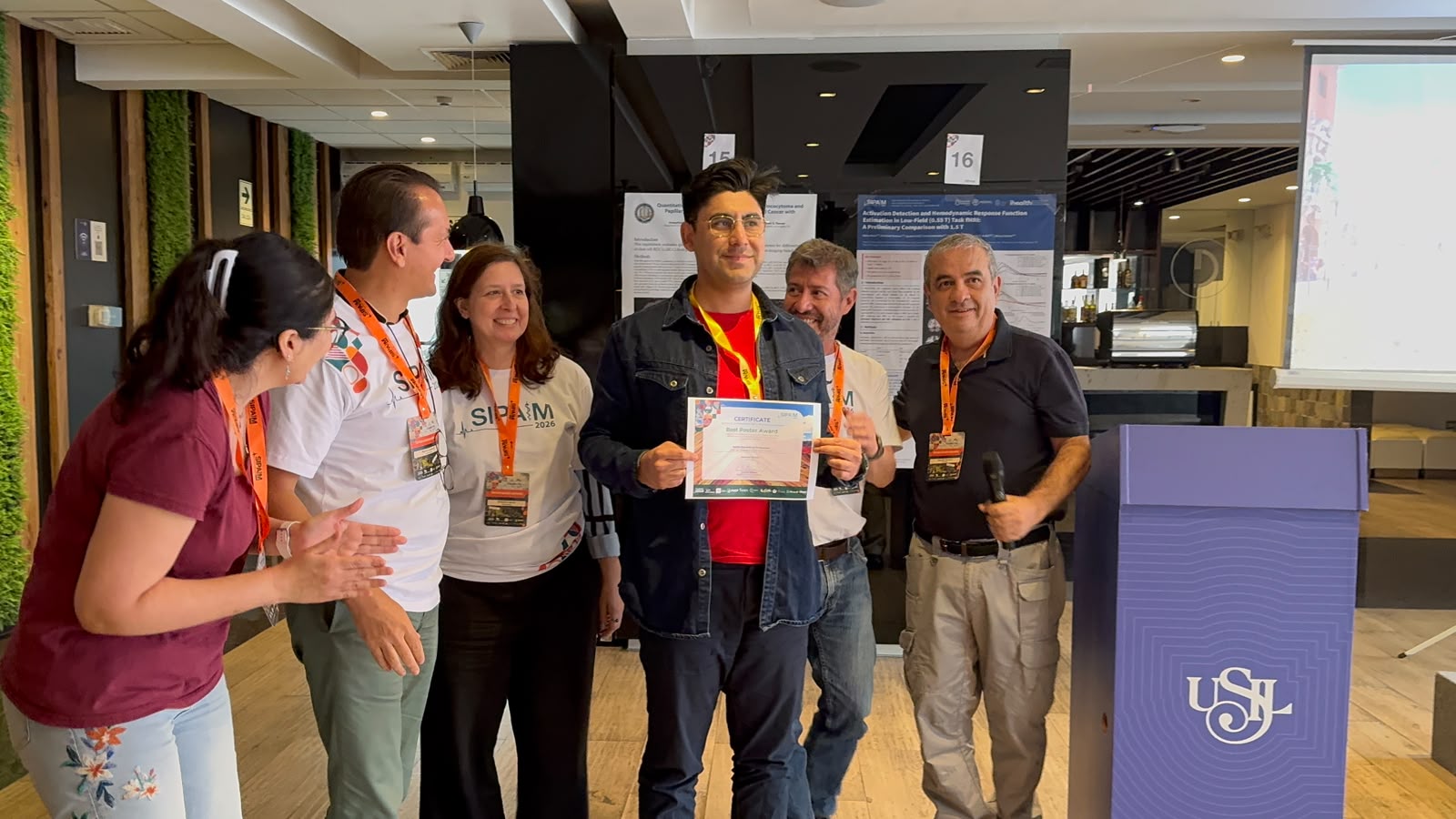
Best Poster Award for Matías Ávila
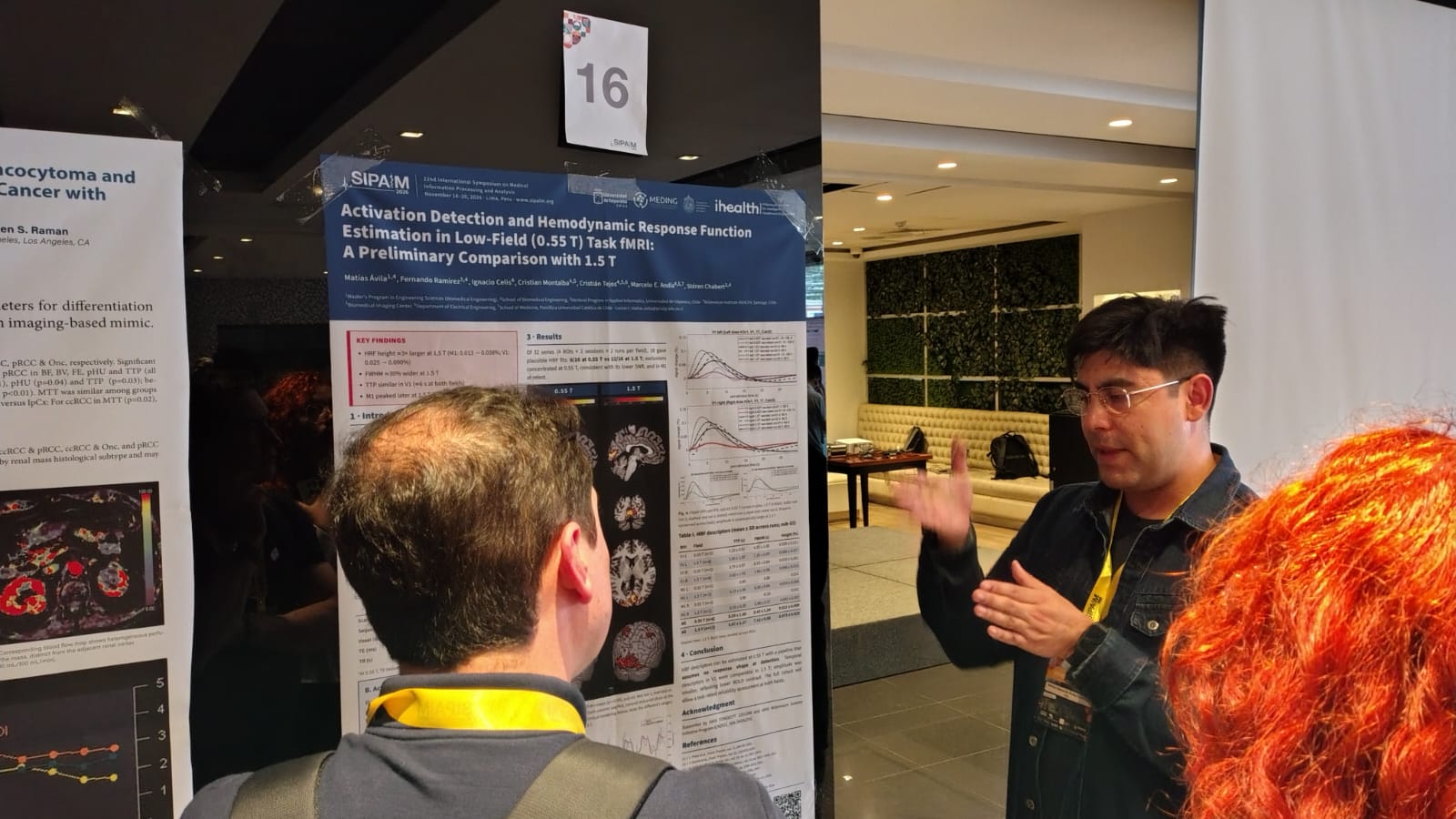
At the same ceremony, Matías Eduardo Ávila Ramírez, a student in the Master's in Engineering Sciences (Biomedical Engineering) at Universidad de Valparaíso, received the Best Poster Award for "Activation Detection and Hemodynamic Response Function Estimation in Low-Field (0.55 T) Task fMRI: A Preliminary Comparison with 1.5 T."
The study presents a method to detect brain activity and estimate the hemodynamic response in low-field (0.55 T) functional magnetic resonance imaging. It compares the results with those from a conventional 1.5 T scanner. The preliminary results show that these measurements can be obtained at 0.55 T, with timing values in the visual cortex comparable to those at 1.5 T.
"This award confirms that low-field functional MRI can provide reliable measurements of brain activity. 0.55 T scanners are cheaper and more accessible, so this opens the door for more centers in Chile and Latin America to do functional neuroimaging," said Ávila. The work is part of his master's thesis, supervised by UV faculty member Steren Chabert. His co-authors are Fernando Ramírez, Ignacio Celis, Cristian Montalba, Cristián Tejos and Marcelo Andía, Alternate Director of iHEALTH.
iHEALTH students from Universidad Técnica Federico Santa María
iHEALTH students from UTFSM also attended the symposium: master's students Benjamín López and Sebastián Gutiérrez, and undergraduate students Matías Fernández, Mariano Varas and Martín Ibáñez.
In the oral presentation session, the UTFSM students presented three studies developed within iHEALTH and the Department of Informatics:
Sebastián Gutiérrez: "Image enhancement in plane-wave ultrasound using a sparse matrix beamformer-integrated U-Net architecture," which proposes improving plane-wave ultrasound image quality by integrating the beamformer (the component that forms the image from the received signals) into a U-Net neural network.
Benjamín López: "Wall Shear Stress Quantification using Neural Networks in 4D Flow Magnetic Resonance Imaging," which uses wavelet-based implicit neural representations (WIRE) with Gabor activations. The method estimates vascular wall shear stress (WSS) from 4D Flow MRI through automatic differentiation.
Matías Fernández: "Deep Learning-Based Couinaud Liver Segmentation in T1 MRI: From Whole-Liver to Subsegments," an nnU-Net v2–based approach that segments both the whole liver and its eight Couinaud segments in T1-weighted MRI.
Together, these oral presentations show how iHEALTH students at UTFSM are contributing to artificial intelligence applied to medical imaging and blood flow analysis.
About SIPAIM
The Symposium on Medical Information Processing and Analysis is organized every year by the SIPAIM society together with local organizers. SIPAIM is a non-profit scientific society that promotes biomedical engineering research in Latin America.
The symposium brings together researchers, students and professionals from engineering, physics, mathematics, computer science, biology and medicine. Its program includes talks by specialists on the acquisition, visualization, processing, analysis and interpretation of medical information. It also includes oral and poster presentations of papers selected by the scientific committee.