Graduate of the Diploma in Artificial Intelligence Applied to Medical Diagnosis creates Odontify
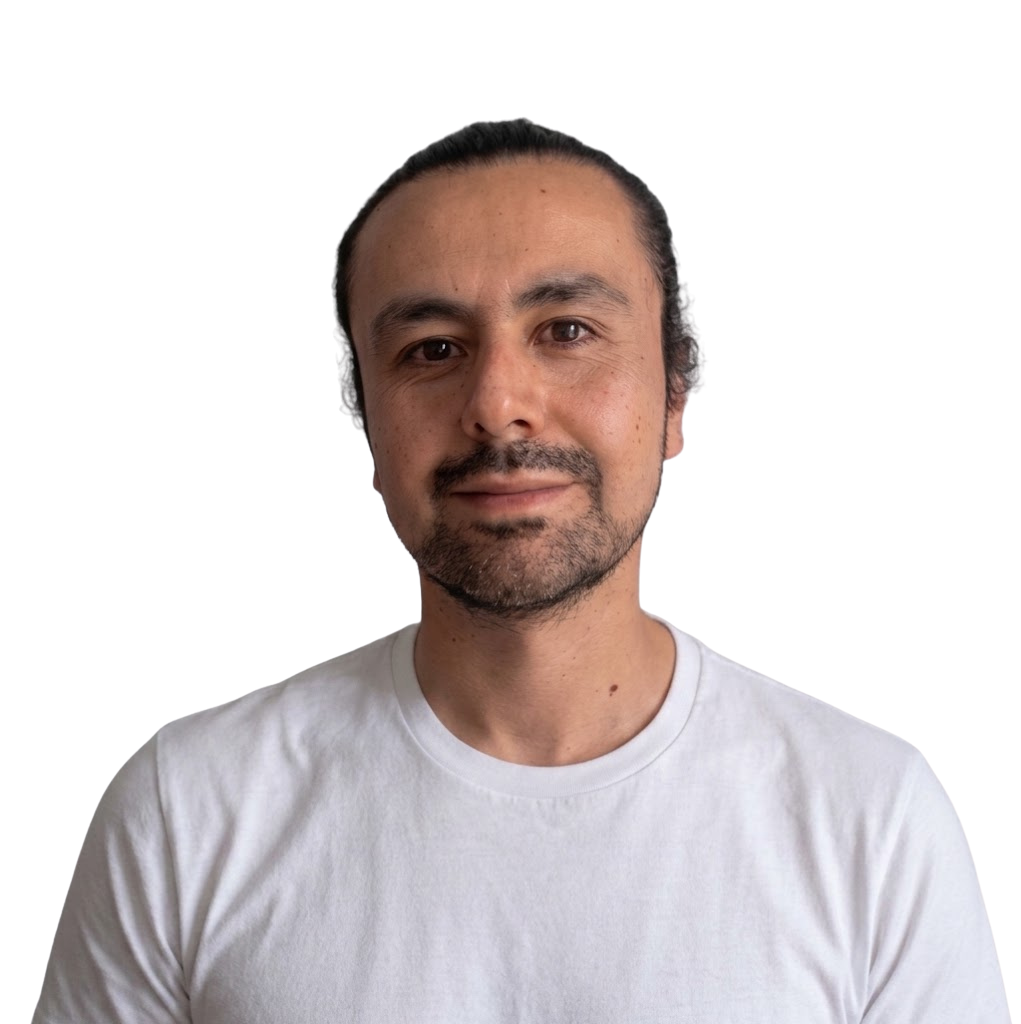
Dental surgeon Leonardo Aránguiz completed the second cohort of the Diploma in Artificial Intelligence Applied to Medical Diagnosis. Months later, he was awarded Corfo's Semilla Inicia fund in Tarapacá to develop a platform that uses AI to facilitate access to dental care in rural areas.
Leonardo Aránguiz is a specialist in implantology and a university professor, but a few years ago he decided to change the course of his career. Convinced that the traditional dental care system "is broken," he began exploring teledentistry in different countries—from Thailand to Mexico and Guatemala—until he found in artificial intelligence the missing piece to turn that concern into a concrete project: Odontify.
Along the way, he took the Diploma in Artificial Intelligence Applied to Medical Diagnosis, an interdisciplinary program that brings together the School of Engineering, the Faculty of Medicine, and the Institute of Biological and Medical Engineering at Pontificia Universidad Católica de Chile, together with the Millennium Institute for Intelligent Healthcare Engineering (iHEALTH). During the program he built Odontify's prototypes and database, and applied what he learned directly to his application for Corfo's Semilla Inicia fund in the Tarapacá region, which he was ultimately awarded in November, almost at the close of the diploma program.
The award allowed him to put together a team, hire developers, and build the first functional version of his platform. As Aránguiz explains, "the diploma's guidance was really important, because you're kind of up in the clouds: you have an idea of how things should be, but not how to actually do it. The know-how is the hardest part."
AI platform to facilitate access to dental care
Odontify uses artificial intelligence to carry out remote dental assessments: patients can send a quick photo of the area bothering them or complete a more detailed assessment with five standardized shots, in addition to describing their symptoms through a conversational assistant. With that information, the platform delivers a preliminary report, an estimated price range, and refers the patient to a partner dentist, via video consultation, WhatsApp, or an in-person appointment.
The focus is on the Tarapacá region, where towns like Camiña or Mamiña have no nearby dentists or specialists. "Access is difficult. You have to travel to the city, first you have to find a trustworthy dentist, and often you're told to come back the following week because there are no appointments available," adds Leonardo Aránguiz.
The business model is free for patients: it's the partner dentists who pay when a person begins treatment referred through the platform. Alongside the technological development, the Odontify team is also conducting an epidemiological study in schools in Camiña to validate, with local evidence, that a photograph can be as reliable as an in-person clinical exam—a step Aránguiz considers key to establishing the project's credibility within the scientific community.
In that same spirit, he has chosen to release much of his work as open source: "the idea is for this to grow bigger than me becoming rich," the dental surgeon emphasizes.
The next step for Odontify is to apply for Corfo's Semilla Expande fund, publish its first scientific studies, and continue adding partner dental clinics in Tarapacá.
Looking back, Aránguiz sees the training as decisive: "It was key to understanding how it's done and the statistical validation part. Sometimes I look back at what I did and think: thank goodness I trained in this, because otherwise I would have been happy with a result that was false."
