Chilean study finds signs of vascular activation in people with venous disease
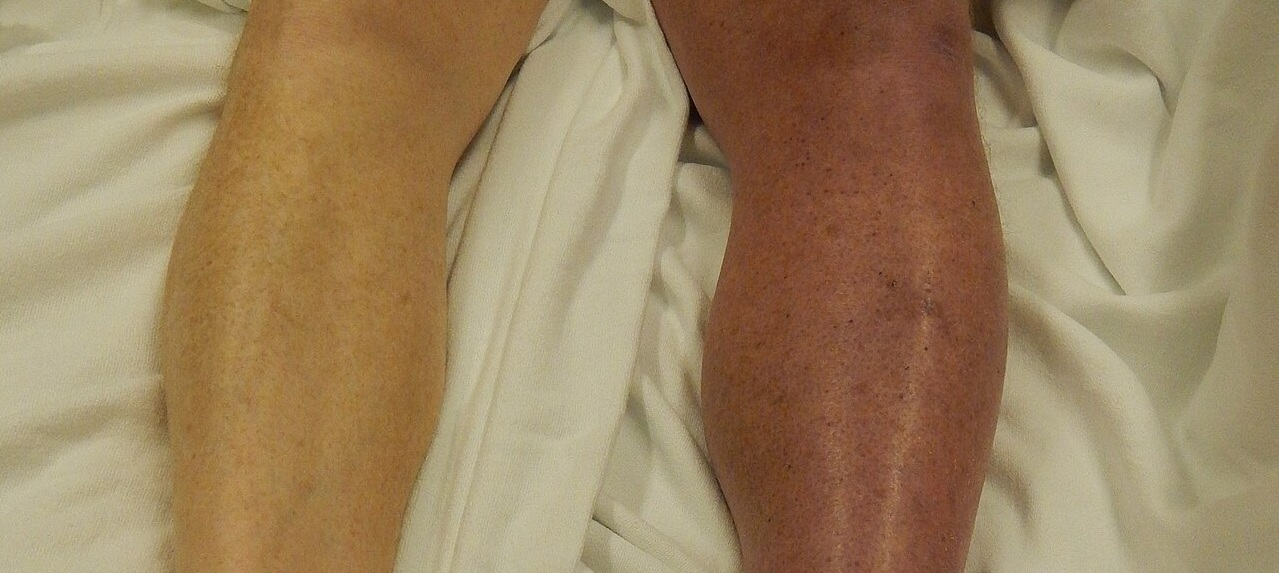
A pilot study involving iHEALTH measured four blood markers and examined the carotid arteries with magnetic resonance imaging in 30 people. ICAM-1, a molecule linked to inflammation of the vessel lining, was higher in those who had had deep vein thrombosis or who had chronic venous insufficiency.
For decades, deep vein thrombosis and atherosclerosis were studied as separate problems: one occurs in the veins, the other in the arteries. However, current evidence suggests they may be more connected than previously thought. A study published in the Journal of Vascular Diseases, with the participation of the iHEALTH Millennium Institute and the School of Medicine at Pontificia Universidad Católica de Chile (UC), explored this relationship for the first time in a Latin American population.
The key may lie in a phenomenon called thromboinflammation. "When we get a wound, the body activates coagulation to stop the bleeding and inflammation to respond to the damage. Both responses communicate with each other," explains José Pesenti, from the UC School of Medicine and first author of the study. "The possible bridge is in the vessel wall. Both veins and arteries have an inner layer of cells that responds to those signals."
The team compared three groups of 10 people: those who had had deep vein thrombosis, those with chronic venous insufficiency, and a control group matched for age, sex and cardiovascular risk factors. Each participant had four blood markers measured and their carotid arteries examined with magnetic resonance imaging.
"There was already research on the relationship between venous thrombosis and atherosclerotic plaques. What we did was bring several pieces of the puzzle together in the same people," says Pesenti.
MRI made it possible to observe the arterial wall in a level of detail that other tests don't provide. "We can better distinguish some of the tissues that make up a lesion and classify it, even when it hasn't yet caused symptoms or significant narrowing," the researcher explains.
Of the four markers, only one showed clear differences between the groups: ICAM-1, a molecule that helps white blood cells attach to the inner lining of blood vessels during an inflammatory response. Its levels were higher both in people with a history of thrombosis and in those with chronic venous insufficiency. "It's a clue that the vascular lining could be more activated in both conditions," says Pesenti.
The team also used machine learning tools to group participants according to how similar their profiles were. "We built a kind of map where the most similar profiles ended up close together. There we could see both the similarities and the overlaps between diagnoses," he explains.
In the group made up mainly of controls, 3 out of 9 people had carotid lesions of grade 3 or higher. In the two groups where people with venous disease predominated, the proportion was 7 out of 9 and 10 out of 12. "The difference is striking, but with so few people the result is imprecise and did not reach statistical significance. It's an observation worth testing in more patients," the author notes.
For Pesenti, the main contribution of this pilot study is that it points the way for future research. "We came out with a much more precise question than the one we started with. Now we know which signal to prioritize and what we would need to measure to understand it better," he says.
The next step is to study more people and follow them over time. "That way we could answer a question that is still open today: is a person with higher ICAM-1 at baseline more likely to develop an atherosclerotic plaque, or to have an existing plaque progress?" he concludes.
Pesenti J., Rivera K., Martínez G., Andia M.E. Endothelial Activation in Deep Vein Thrombosis and Chronic Venous Insufficiency: An Exploratory Pilot Study. Journal of Vascular Diseases, 2026, 5, 48. https://doi.org/10.3390/jvd5060048
