AI for breast cancer detection
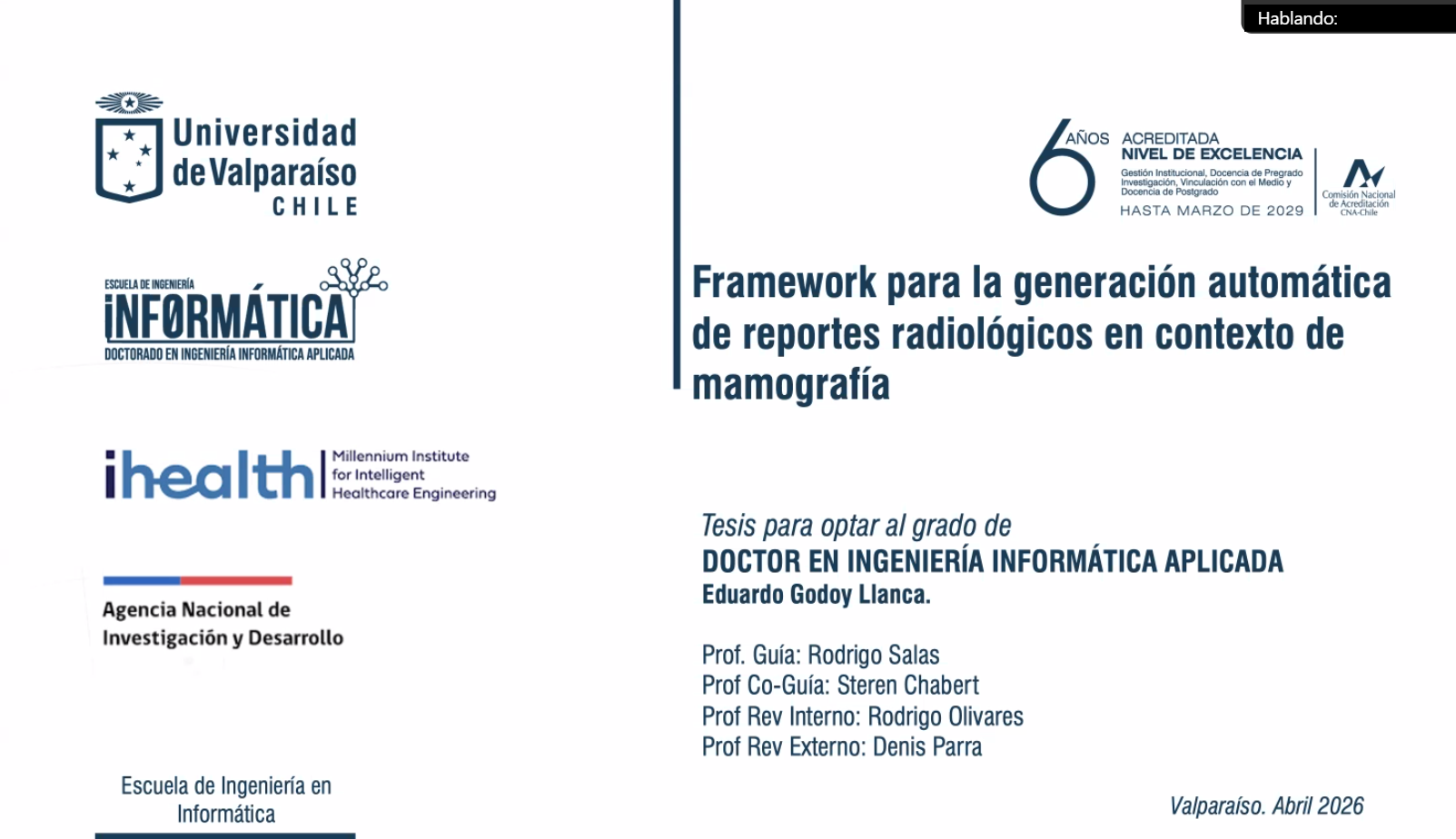
Doctoral research developed a multimodal framework capable of generating mammography radiology reports in Spanish, combining real images with structured clinical information, and implemented a functional prototype to be applied in a clinical setting in the future.
At the international level, tools already exist that use Artificial Intelligence (AI) to support breast cancer diagnosis, particularly for detecting suspicious findings in mammograms (*).
In Chile, their impact is still limited and largely in pilot phases. "Technology is moving toward more comprehensive systems: they not only detect findings, but interpret them and generate complete clinical reports," says Eduardo Godoy, iHEALTH researcher, who defended his thesis in early April — Framework for the Automatic Generation of Radiological Assistance Reports in Mammography — in the Doctoral Program in Applied Computer Engineering at the Universidad de Valparaíso (UV).
The specialist developed an AI-based system that automatically generates reports by combining medical images with structured clinical information. Built on a real clinical dataset, the system enabled advances in clinical entity extraction and structured text generation in Spanish — a largely unexplored area for the language — and demonstrated feasibility in concrete hospital settings.
The next step is clinical validation in direct collaboration with healthcare professionals. The researcher projects that, in the medium term, the technology could become a diagnostic support tool available in healthcare centers, contributing to improved quality, efficiency, and timely access to radiological diagnosis.
For Eduardo, this type of development must go beyond the technical and have a real impact on people and the healthcare system. In that regard, he highlights iHEALTH's contribution as an interdisciplinary environment where technology and health converge: "Access to collaboration networks, academic support, and resources made it possible to advance from defining the problem to validating the solutions."
(*) Sources:


