Seminario 23 de Septiembre 2025
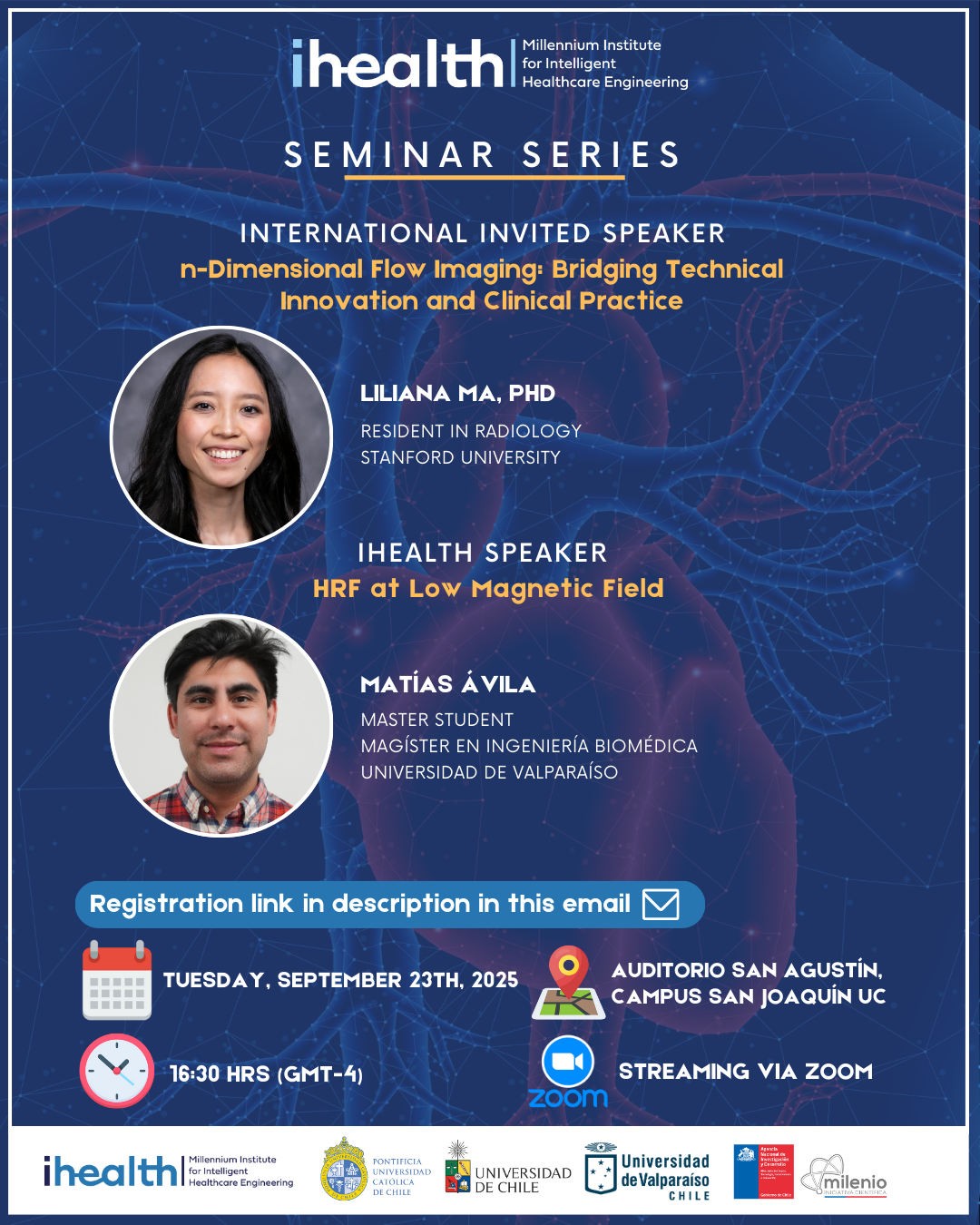
Horario: 16:30 - 18:00
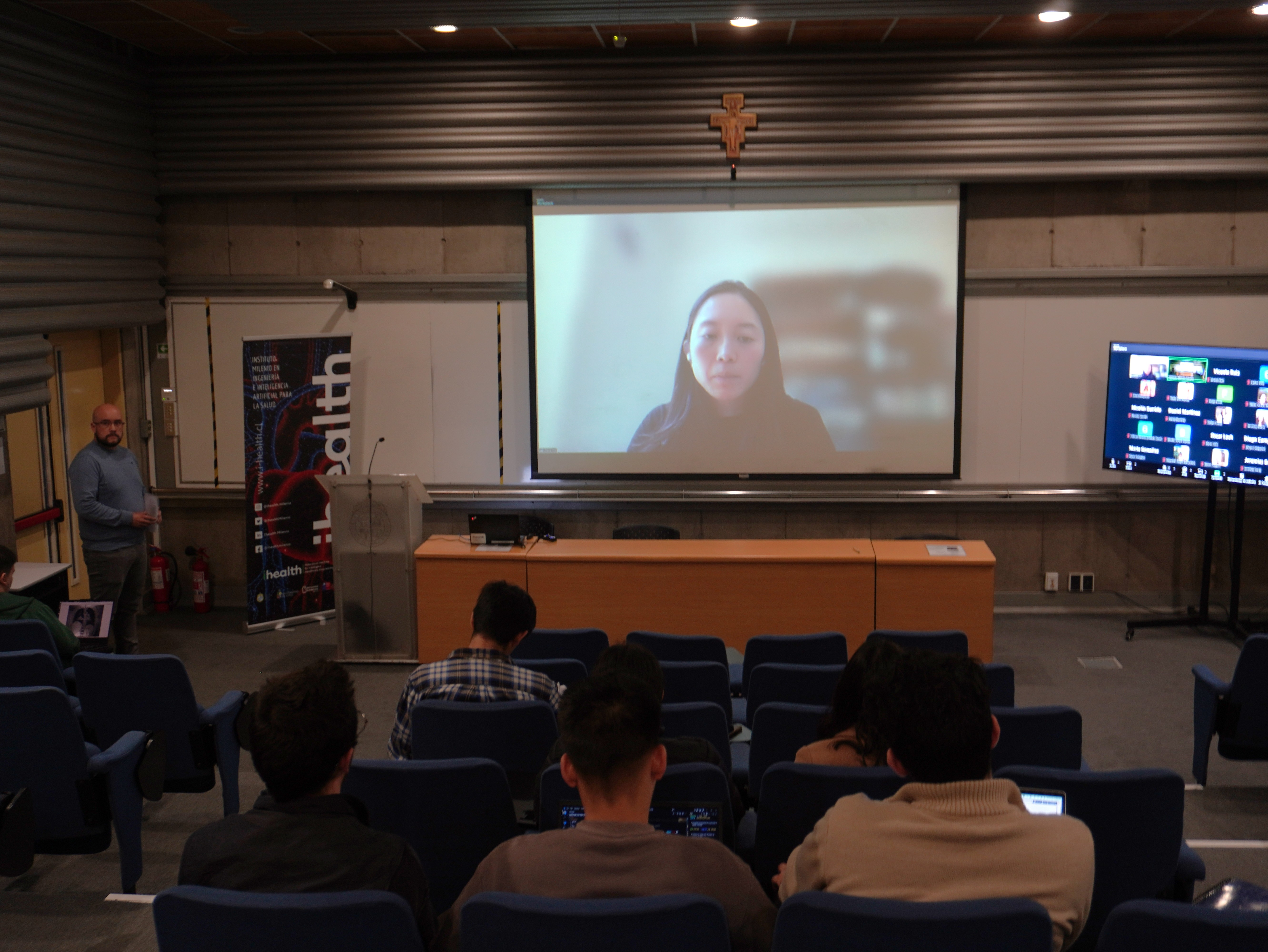
INTERNATIONAL INVITED SPEAKER
Liliana Ma
SHORT BIO: Liliana Ma is a radiology resident at Stanford University with an MD and PhD in Biomedical Engineering from Northwestern University. Her research focuses on advanced multi-dimensional flow MRI and its clinical applications, including pioneering a 5D flow imaging technique and contributing to the 2023 4D Flow CMR Consensus Statement. She has expanded her work to AI-driven radiology workflows, is a Junior Fellow of ISMRM, and has held leadership roles such as Chair of the Early Career Committee of the Society for Magnetic Resonance Angiography.
TITLE: n-Dimensional Flow Imaging: Bridging Technical Innovation and Clinical Practice
ABSTRACT: While multi-dimensional flow imaging techniques such as 4D flow MRI have shown significant promise across a wide range of cardiovascular diseases, clinical implementation is still limited by long scan times. Traditional 4D flow approaches use respiratory gating techniques to minimize respiratory artifacts, typically inefficiently accepting data during a small portion of the cycle and discarding the rest. Additionally, because 4D flow imaging is performed over multiple cardiac cycles, patients with arrhythmias (e.g., atrial fibrillation) often experience degraded image quality due to the averaging of irregular heartbeats. Recent advances in flow imaging frameworks have led to novel binning approaches. These techniques have improved scan efficiency and enabled dynamic resolution of additional dimensions. This talk will introduce the fundamentals of multi-dimensional flow imaging and explore cutting-edge innovations that are accelerating its path toward broader clinical implementation.
iHEALTH SPEAKER
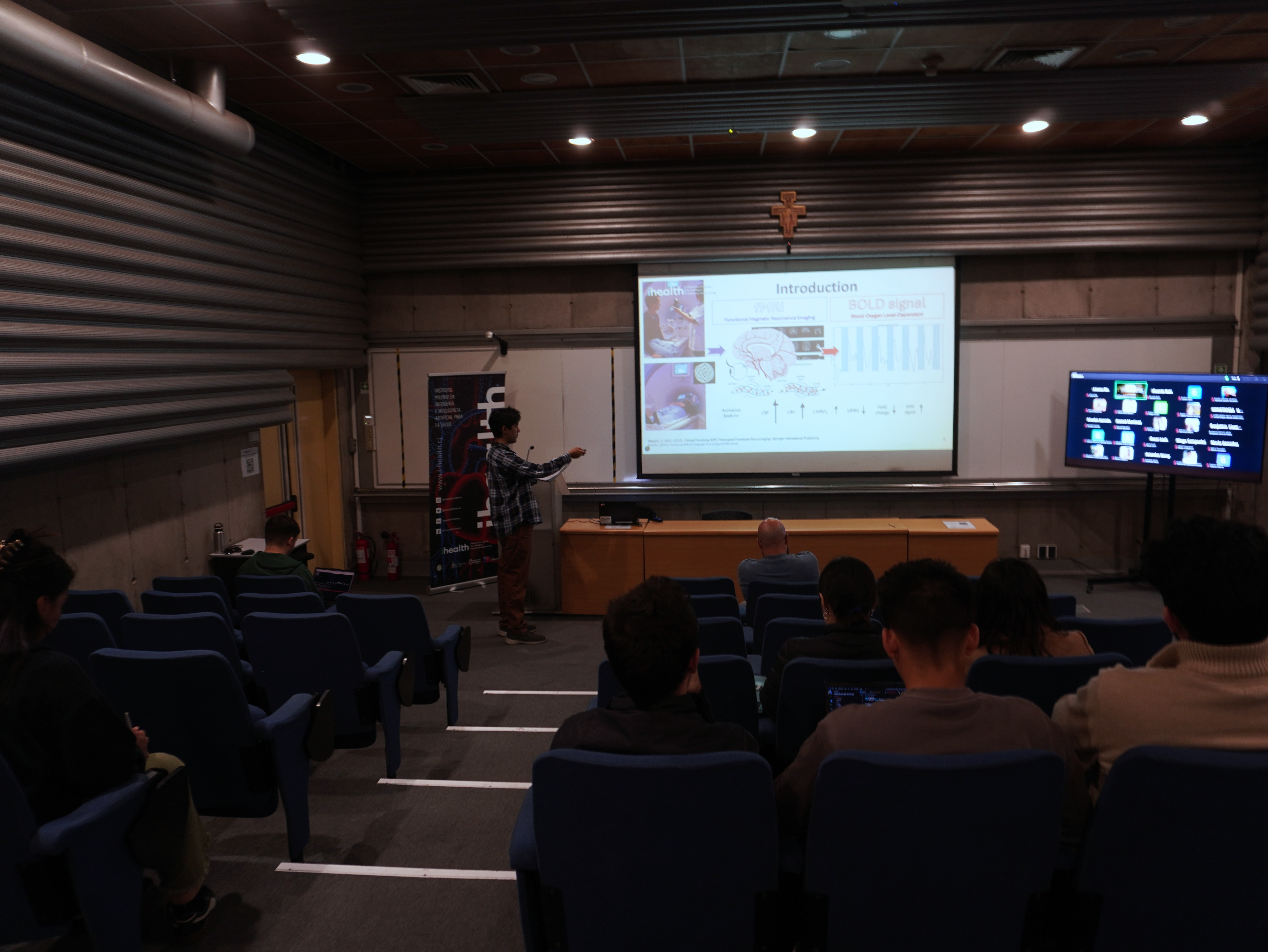
Matias Avila
SHORT BIO: Matías Avila is a MSc student in Engineering Sciences, major in Biomedical Engineering at Universidad de Valparaiso. His research focuses on Hemodynamic Response Function at Low Magnetic Field.
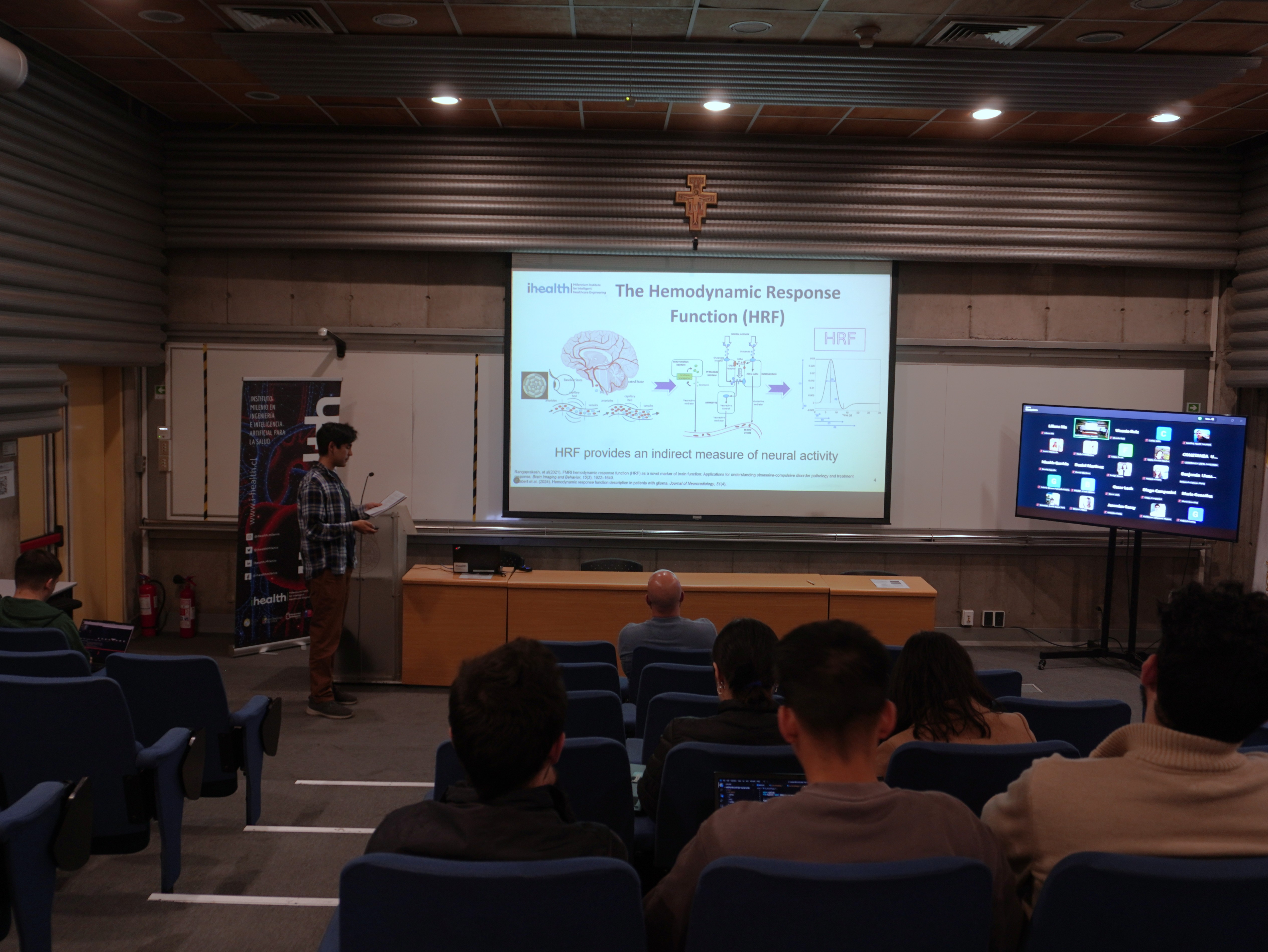
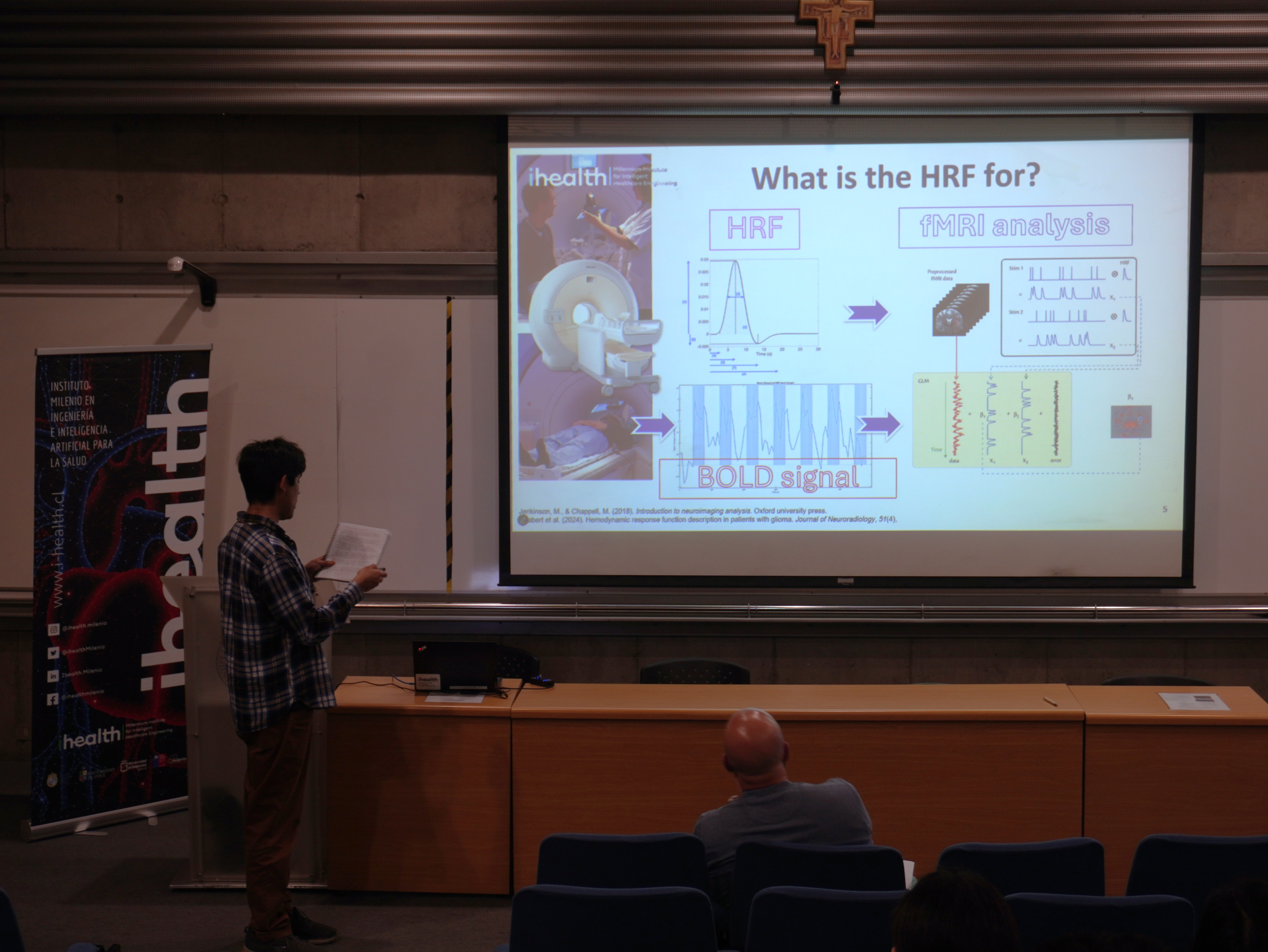
TITLE: HRF at Low Magnetic Field
ABSTRACT: Low-field functional MRI (0.55 T) offers the opportunity to broaden access to neuroimaging studies, but its reliability in estimating the hemodynamic response function (HRF) remains uncertain. This work explores the feasibility of deriving HRF estimates from time series acquired at 0.55 T and proposes their validation through comparison with estimates obtained at 1.5 T. The main goal is to assess whether HRF descriptors (such as latency, amplitude, and width) show statistically significant similarity across field strengths, thereby establishing the reliability of low-field acquisitions for functional studies.